


What is Industry 4.0?

Definition of Industry 4.0
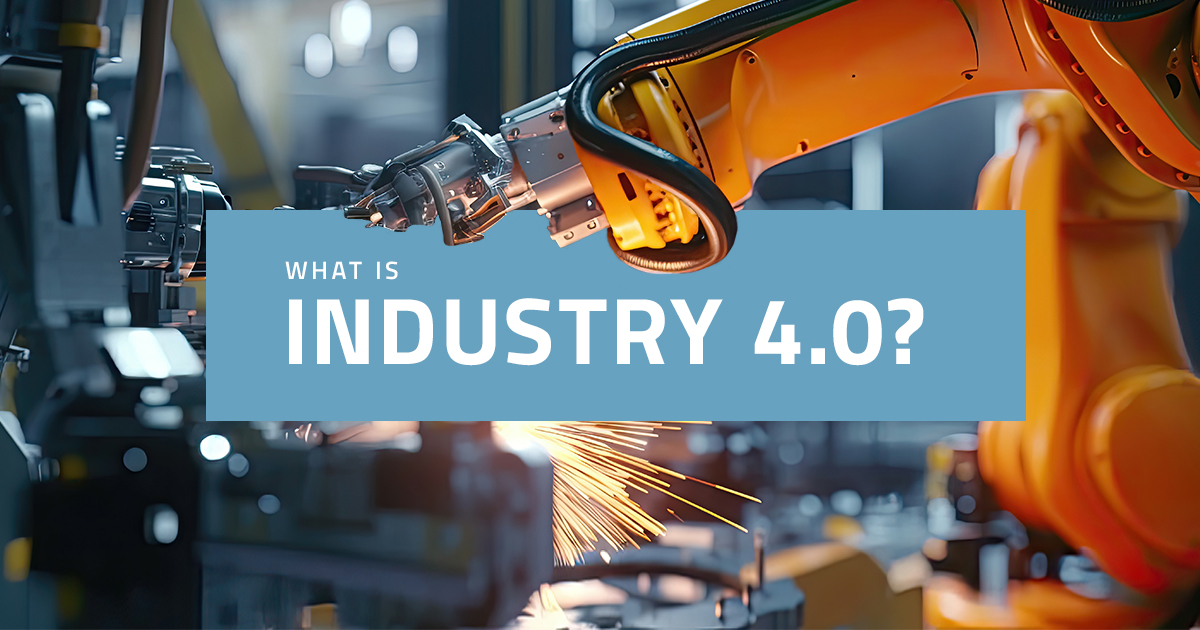
The term Industry 4.0 refers to the intelligent networking of systems, machines and processes using modern information and communication technologies. Put simply, the real manufacturing world is linked to the digital world, resulting in the smart factory. Industry 4.0 refers to technologies in the areas of mechanical engineering, logistics and services.
Industry 4.0 is a wide-ranging topic that is characterized by its historical development as well as its current goals and challenges. Further articles are available to help you gain a comprehensive understanding:
- Historical background : Learn more about the historical milestones that led to the emergence of this technological revolution.
- Goals, current status and future trends : An overview of the core goals and status quo of Industry 4.0.
Key technologies of Industry 4.0
The latest key technologies are used in the design and manufacturing process. These include:
IoT (Internet of Things) and M2M (machine-to-machine)
The IoT describes a network of interconnected devices, sensors and systems that exchange data via the internet and often interact in real time. M2M communication forms an important basis.
Artificial intelligence (AI) and machine learning
AI refers to the ability of machines and systems to imitate human thinking. It enables problem solving, pattern recognition and decision-making based on data and algorithms.
Big data, data management and cloud computing
Big data refers to large, complex and rapidly growing volumes of data that can no longer be analyzed or managed efficiently using conventional data processing methods. It requires special technologies and approaches in order to gain valuable insights.
Data management encompasses all processes, technologies and strategies that are necessary for the organization, storage, maintenance and use of data in order to ensure its quality and availability. It forms the basis for data-based decisions.
Cloud computing is the provision of IT resources such as storage space, computing power or applications via the internet ("the cloud"). It enables users to access resources flexibly and scalably without having to manage them themselves on site.
Digital Twin
A Digital Twin is a virtual representation of a physical object or process that is used for analysis and optimization.
3D printing
3D printing enables the production of prototypes directly from digital models, which shortens development cycles.
Virtual and augmented reality
These technologies support the visualization and simulation of products in immersive environments.
Robotics
Robotics enables the precise simulation of motion sequences and optimizes production processes.
Possible uses and examples
- Automated production:
Use of robots in smart factories, such as at Bosch and Siemens - Predictive maintenance:
Use of IoT sensors and AI to monitor machines, e.g. by GE and SAP - Use of artificial intelligence:
Support in design and production, e.g. by Dassault Systèmes and PTC - Self-monitoring production facilities:
Integration in plants such as at Volkswagen and BMW - Virtual commissioning:
Simulation and optimization of production processes with Digital Twins. Siemens is a leader in the development of Digital Twins for the simulation and optimization of production processes. Dassault Systèmes offers Digital Twins for the planning and simulation of production lines via the 3DEXPERIENCE platform.
Our services for Industry 4.0
Cadenas supports companies in exploiting the potential of Industry 4.0. With 3Dfindit, we enable access to millions of CAD and CAE models. Our solutions promote digital networking and provide support with Digital Twins, product data and virtual and augmented reality integration.
Conclusion
Industry 4.0 brings with it many new technologies that significantly simplify the design and manufacturing process. The resulting smart factory can quickly adapt to current trends and manufacture promptly and cost-effectively. Experts predict productivity increases of up to 30 percent by 2025.
Is your data ready for Industry 4.0?
The factories of the future will work almost autonomously. Are you prepared? Only companies that tackle the digital transformation at an early stage will secure competitive advantages.
