


The development of the 3D-printed, airless basketball
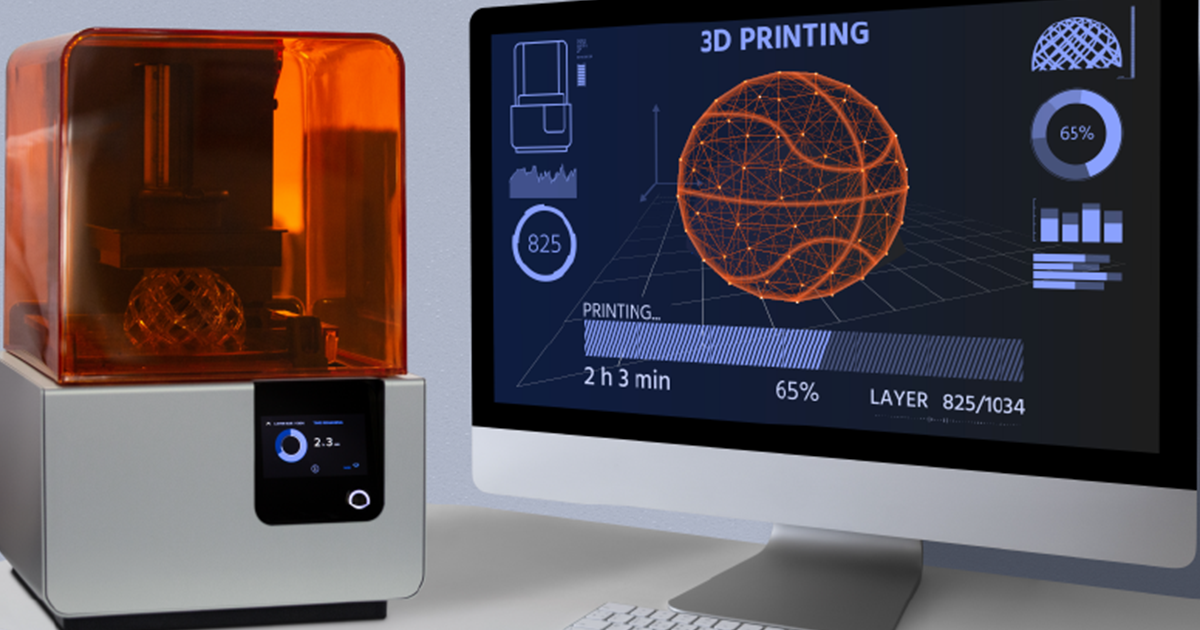
Wilson has developed an airless basketball using 3D printing.
That seems counterintuitive: an airless basketball? Basketballs bounce because of the pressurized air inside them. When the basketball is deflated, it doesn't bounce as high. Basic science.
But Wilson wants to break through these assumptions with the Wilson Airless Prototype.
What if you had a basketball that was 3D printed and never went flat?
Summary
- What is it and how does it work?
- Wilson has used 3D printing to develop an airless basketball that never goes flat.
- It has the same weight and size as a conventional basketball and rebounds in exactly the same way.
- How is it made?
- Wilson engineers worked with several industrial design and 3D printing companies.
- They use a 3D printing process called selective laser sintering (SLS) to produce the prototypes.
- Advantages
- The manufacturing process is more sustainable.
- Players never have to inflate or deflate, saving time and frustration.
- Disadvantages
- Some worry that the Airless Prototype could affect a player's shot, as the holes could affect the movement of the basketball in the air.
- It's unclear how a basketball with holes would handle sweat or outdoor elements like wind and dirt.
Wilson officially unveiled the Airless Prototype Basketball during the 2023 NBA Slam Dunk Contest with player K.J. Martin.
"When I actually saw the ball in the flesh, it was crazy. I didn't expect a basketball with holes to feel and bounce like a normal leather basketball," said Martin.
How does the airless prototype work?
The Wilson Airless Prototype is the same weight, size and bounce as a traditional basketball, but its structure and materials eliminate the need to inflate or deflate it.
The ball has a 3D-printed grid design. A "grid" is a frame of intersecting materials that forms a grid pattern. This means that the ball is covered with a series of hexagonal holes through which air can enter the ball.
From a scientific point of view, it is not clear how an airless basketball can bounce in the same way as a normal basketball. Wilson has only said that his airless prototype is "based on a 3D-printed structure and research-grade materials to replicate the bounce of a traditional basketball", and that it is made from a proprietary material.
Why did Wilson develop an airless basketball?
Because the Airless Prototype is made from only one material and with one machine, the manufacturing process is more sustainable.
In addition, conventional balls deflate and burst over time. This is not the case with an airless basketball. This would make the ball accessible to more people. Players would not have to worry about maintaining the ball or buying a new one if their ball bursts.
"All inflatable balls, no matter how they are made or who makes them, will eventually go flat, no matter the sport," says Dr. Nadine Lippa, Innovation Manager at Wilson. "That's why we wanted to address this most common consumer complaint by completely eliminating the bladder and developing an airless structure."
This design can also be used in other sports (e.g. soccer). Thanks to the additive manufacturing process, every ball would be exactly the same. Players wouldn't have to worry about using an overinflated or underinflated ball in a game, and leagues and officials wouldn't have to watch out for intentional under- or over-inflation (i.e. no more deflategate).
How did Wilson develop the Airless Prototype?
Wilson engineers worked with General Lattice, a computer-aided design and digital manufacturing company, EOS, an industrial 3D printing company, and DyeMansion, an industrial polymer 3D printing company, to design and manufacture the airless prototype.
"Working with a brand like Wilson is special for EOS as we traditionally work with companies in the aerospace, automotive and medical industries." John Walker, Business Development Director, EOS North America, said.
How is the airless prototype manufactured?
The airless prototype is still in the testing phase. It is therefore not certain whether and how Wilson will mass-produce an airless basketball. However, a 3D printing process called selective laser sintering (SLS) is used to produce the prototype balls.
It took several years of trying out different combinations of materials, geometries and additive manufacturing technologies to develop a ball that bounces just as well as a standard ball and is still durable.
Eventually, Wilson discovered that they could use SLS to make the ball exactly the way they wanted it.
In SLS printing, the user feeds a powder into the SLS 3D printer (in this case, a powder made from a proprietary custom polymer). A laser then draws a 2D pattern in the powder by melting it - a kind of "etch a sketch", but with lasers.
The printer repeats this process layer by layer until you have a 3D basketball made of solid materials.
When the printer is finished, they shake the loose powder off the ball, seal it and color it. Then it is sent to the NBA's testing facility in Ada, Ohio.
Will the NBA use the airless basketball?
Since the airless prototype is still in the testing phase, it is unclear whether the NBA will use it in official games. However, Wilson has consulted with NBA players to test and improve the design.
How much does the airless basketball cost?
There are estimates that an airless basketball could cost between 200 and 250 dollars, which is about the same price as Wilson's current NBA Official Game basketball.
What are the disadvantages of the airless prototype?
The Airless Prototype certainly has its detractors, and the biggest complaints center around the open holes in the ball.
Some who have tried the Airless Prototype have said that it feels a little strange because it's not made of traditional leather.
And if you play outside, what happens when it's windy? What if you get rocks, dirt or other debris in it? What if sweat gets inside?
And will the open holes in the ball affect a player's shot? More holes mean more airflow. So could the design of the airless prototype affect how the ball moves through the air?
We will only be able to answer these questions over time, as the ball is still at an early stage of development.
The Airless Prototype basketball from Wilson shows how innovation and 3D printing can change traditional design. With its airless grid structure, this basketball bounces like a normal ball but doesn't go flat - an exciting advance for athletes and manufacturers alike. Although it is still in development, the sustainability and longevity of the design point to wider applications in sport.
For engineers researching cutting-edge designs or seeking 3D models for their own projects, 3Dfindit is the perfect tool. 3Dfindit offers 3D CAD, CAE and BIM models from manufacturers in over 100 different formats from more than 6,000 catalogs. Explore 3Dfindit today!
Additional sources
https://www.wilson.com/en-us


