


Job description: Environmental engineer

What is environmental engineering?
Environmental engineering takes up the challenge of developing technical solutions that promote the protection of the environment. It combines natural sciences, engineering and socio-economic approaches to enable companies to achieve sustainable and economically efficient production. This article sheds light on how the occupational field of environmental engineering is structured, what tasks are involved in this job and what career opportunities are available.
What does an environmental engineer do?
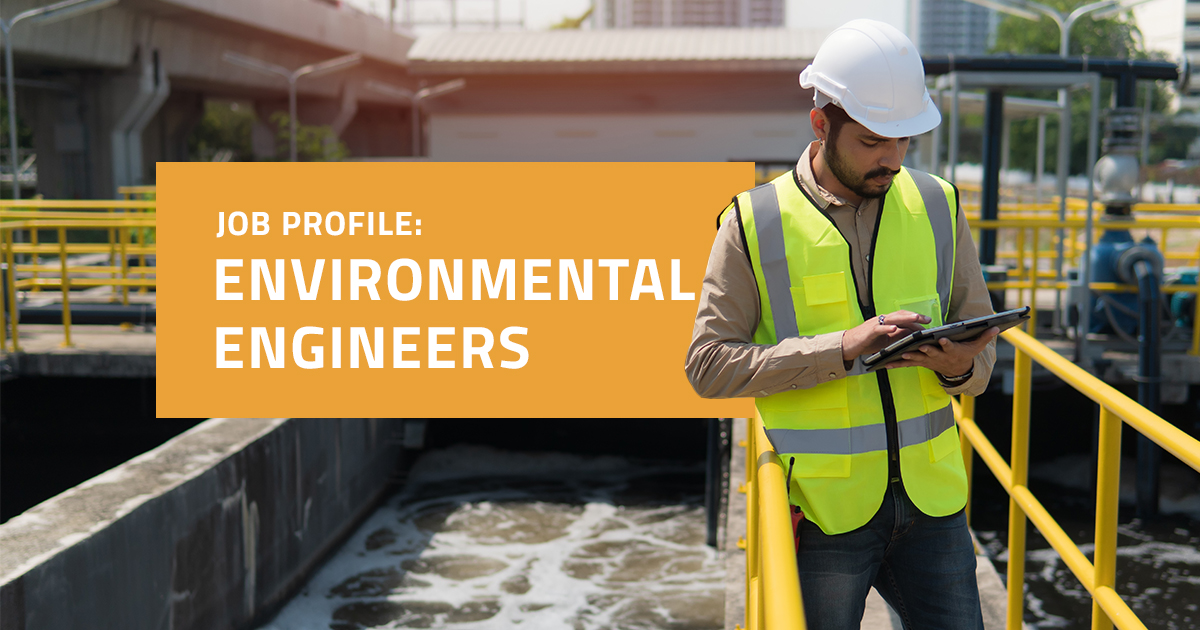
Environmental engineers plan, develop and monitor technical processes that have sustainable and resource-saving effects. The profession is very complex, as every measure, construction and device must be both economical and environmentally friendly. The tasks of an environmental engineer include
- Proper disposal: Although it may not seem so at first glance, waste management is of enormous importance, as the proper disposal of toxic or polluting substances is crucial to protect the environment.
- Preparation of expert reports: In the public sector, environmental engineers prepare assessments that evaluate the sustainability of an operation and incentivize production improvements.
- Advising companies: Environmentally friendly products and sustainable production - to achieve these goals, companies should consult an environmental engineer. They can develop specific concepts and provide comprehensive advice.
- Energy management: Energy saving and environmental protection have become important even on a small scale. Environmental engineers are in demand here to take over the sustainable energy management of buildings. They manage internal waste, reduce energy consumption with new systems and technologies and ensure the maintenance and operation of buildings. They are particularly popular in hospitals, industry and with energy suppliers.
- Development of regenerative energy technology: Wind power, photovoltaic systems and biothermal energy are important for environmentally friendly energy generation. Environmental engineers develop, plan and build these systems.
- Environmental science: In this field, environmental engineers develop and use new, innovative technologies that contribute to sustainability.
The environmental engineering profession is extensive and diverse, making it difficult to summarize. As environmental protection is gaining in importance every year, engineers in this field have many areas of application and responsibility. Due to the high global demand for specialists in sustainability and resource protection, the future prospects in this profession are excellent.
What skills does an environmental engineer need to have?
As environmental engineers have the extremely demanding task of taking into account the interests of many different parties, they must have sound knowledge in numerous areas. Macroeconomic and societal aspects, ecology and technology are just a few of them. An engineer in this field must be able to analyze precisely how a planned project or scheme will affect other aspects or living creatures and find appropriate solutions, which requires solution-oriented thinking and action.
Environmental engineers have a high level of responsibility, which is why stress resistance is an important soft skill. In view of the enormous progress made through ecological measures, technologies and innovations, this is an essential and very fulfilling profession.
How do you become an environmental engineer?
As with all engineering sciences, a degree is required to become an environmental engineer. This interdisciplinary course is offered full-time at technical universities or universities of applied sciences, but there are also institutions that offer dual study programs. There are universities in Germany that offer the subject of sustainable engineering, which has many similarities with environmental engineering in terms of content.
What important networks and professional associations are there for environmental engineers?
Environmental engineers can benefit from a variety of networks and professional organizations that provide important resources and support. Important organizations in Germany include the Association of German Engineers (VDI) and the German Society of Environmental Engineers (DGU). These organizations provide a platform for the exchange of knowledge and experience, promote professional development and hold regular conferences and seminars. Through membership in such networks, environmental engineers gain access to exclusive job opportunities, can participate in mentoring programs and expand their professional contacts.
What career opportunities and specializations are there for environmental engineers?
There are numerous career paths and specializations in environmental engineering that cater to the diverse interests and skills of engineers. The most common specializations include waste and recycling management, water and wastewater engineering, air pollution control, soil conservation and renewable energy. Each of these specializations opens up specific career opportunities in different industries. A particularly large number of environmental engineers find employment in the energy and utilities industry, the construction and infrastructure sector, public administration, as well as in consulting firms and non-governmental organizations (NGOs). Large industrial companies looking to improve their environmental footprint, research institutions and universities also offer attractive career opportunities.
Conclusion:
The profession of environmental engineer is varied and, like almost all engineering professions, very challenging. Anyone who is up to the challenge and wants to protect our planet will find this profession fulfilling and future-proof. With an average salary of around €54,467 gross per year, the remuneration is slightly lower than other engineering professions, but it is very good and offers room for growth.
Want to find out more about engineering careers? Our articles on aerospace engineers and pharmaceutical engineers go into detail about the tasks, requirements and career prospects of these professions.
