


What types of screws are there?

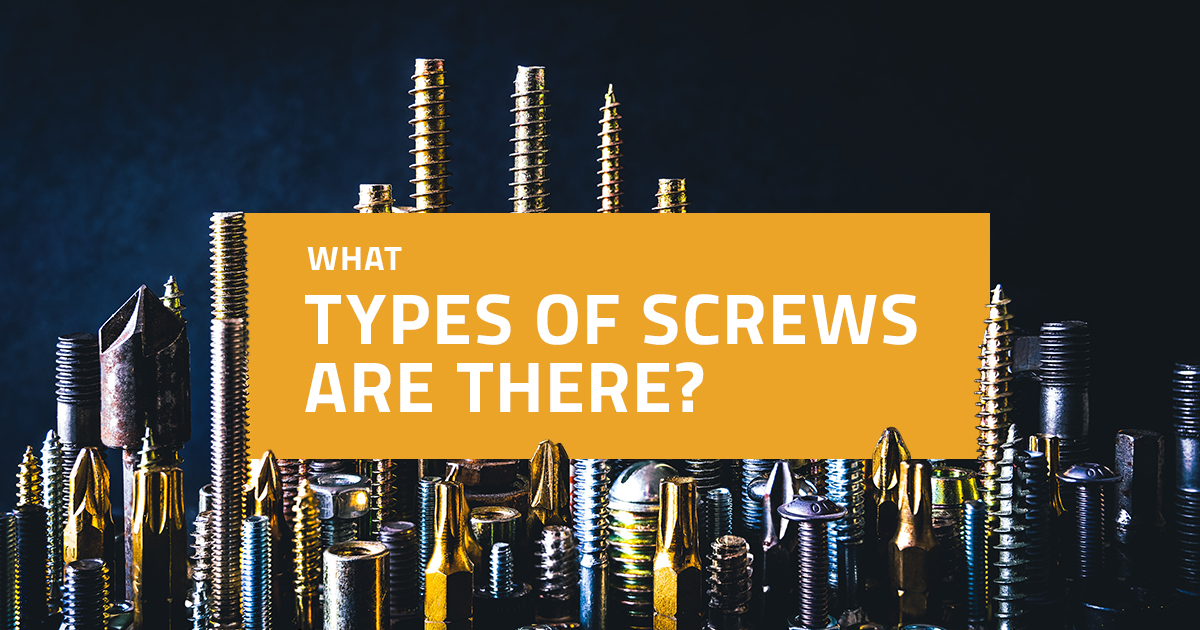
Everyone has probably had to deal with screws more than once in their lives: whether it's to fasten furniture in the home, to secure parts on a car or in the construction of machines - they are needed almost everywhere something needs to be fastened. Most people will have noticed that there is more than just one type of screw, at the latest when installing something if the right screwdriver was not available. But what types of screws are there and why are different ones needed?
An overview of the most important screw types
First things first: There are generally two main categories of screw types, wood screws and metal screws. As the names suggest, these differ mainly in terms of the material they are made for. However, the respective sub-categories of wood and metal screws all have their own special areas of application. They differ visually from each other in terms of the shape of the head (or lack thereof) and the thread. The variety of screws is almost unlimited, as new designs and specialized screws are constantly being developed for specific applications. Therefore, we do not list every type of screw below, but the most common ones.
Wood screws:
Wood screws are used in wood and furniture construction and are characterized not only by a very sharp point that can easily penetrate the wood, but also by their special threads that create strong connections.
-
#Cross-head screws are probably the best known and are an absolute classic among screws.
-
Round-head wood screws remain true to their name with their strongly rounded head. This type of wood screw is very popular due to its versatility and is used in particular when visible but stylish fastenings are required. The round-head wood screw also has several drive types, making it suitable for any tool.
- Flat head wood screws are ideal when a smooth and flush finish is required. This type of screw is usually found with a Phillips, square drive or Torx drive.
- Traverse head screws are mainly used when cracks and splits need to be avoided. This is the best choice for thin or delicate pieces of wood in particular.
-
#Lenticular head screws have a slightly curved head and have the advantage of being almost as stylish as flat head wood screws, but provide more stability and are more forgiving when countersinking. This type of screw is available with different drives. They are often used for fittings in cabinets or furniture.
- #Hexagon head screws for wood provide the robustness needed for projects where durability is required. This makes them perfect for outdoor work or where extra strength is required.
Metal screws:
Metal screws differ from wood screws mainly due to their blunt tip and even thread. It should also be noted that metal screws often require a nut or other mating thread into which they are screwed. Metal screws are mainly used in metal construction and often have very specific tasks to fulfill.
- #Machine screws are generally used in mechanical engineering and metal construction. As you might expect, they are often used to fasten metal parts in machines and structures. They have a cylindrical shank and a uniform thread over the entire length. They require a pre-drilled, threaded hole or a nut.
- Self-tapping screws can be screwed directly into metals such as steel or aluminum without the need to pre-drill, thanks to their self-tapping threads. They are often used for light metal constructions and for fastening sheet metal.
-
Sheet metal screws could well be described as the traverse head screws of metal screws: Their coarse, sharp thread is specially designed for screwing thin metal sheets and provides optimum holding power.
- #Countersunk screws have a conical head that sits flush or slightly below the surface of the material. This enables a seamless finish, which is particularly advantageous when building metal housings or in furniture construction.
- #Threaded pins go one step further than countersunk screws - they have no head and are screwed completely into the material. They often have an internal thread for an additional fastening element. This type of metal screw is often used to hold parts in place, for example in shaft-hub connections or mechanical devices.
Of course, there are many other distinguishing features for screws, such as the drive types, surface coatings, material or length and diameter already mentioned. However, listing these would require a separate article. Nevertheless, we would like to point out that, especially in engineering, it is important to familiarize yourself not only with the different types of screws, but also with their special properties. A thorough introduction to these factors is crucial for the successful and safe completion of any construction or assembly project.
Suppliers of screws on 3Dfindit
Now that we know some screw types and their applications, and you may have already chosen one of these types for a planned project, we would like to show you some suppliers for specific screw types on 3Dfindit.
| screw type | Provider |
|---|---|
| Phillips head screws | MISUMI, SFS Group Switzerland AG |
| Round-head wood screws | Visserie - Boulonnerie - Acier Inoxydable, FG INOX, Fabory, HECO screws |
| Flat-head wood screws | RAMPA |
| Pan head screws | Bossard |
| Hexagon head screws | Visserie - Boulonnerie - Acier Inoxydable, Blohm, Bossard, KIPP, MISUMI, norelem, SFS Group Schweiz AG, Elesa+Ganter, igus |
| Machine screws | MISUMI, A.R.T. Elektromechanik, Berger Tools, Blohm, Bossard, BUMAX, EMILE MAURIN, Fabory, FIBRO, Ganter |
| Self-drilling screws | SFS, Fabory |
| Sheet metal screws | Visserie - Boulonnerie - Acier Inoxydable, Bossard, SFS, Fabory |
| Countersunk screws | Visserie - Boulonnerie - Acier Inoxydable, Bossard, BUMAX, norelem, SFS, igus |
| Grub screws | Blohm, Bossard, Elesa+Ganter, KIPP |
