


What are drain elements used for and how do they work ?
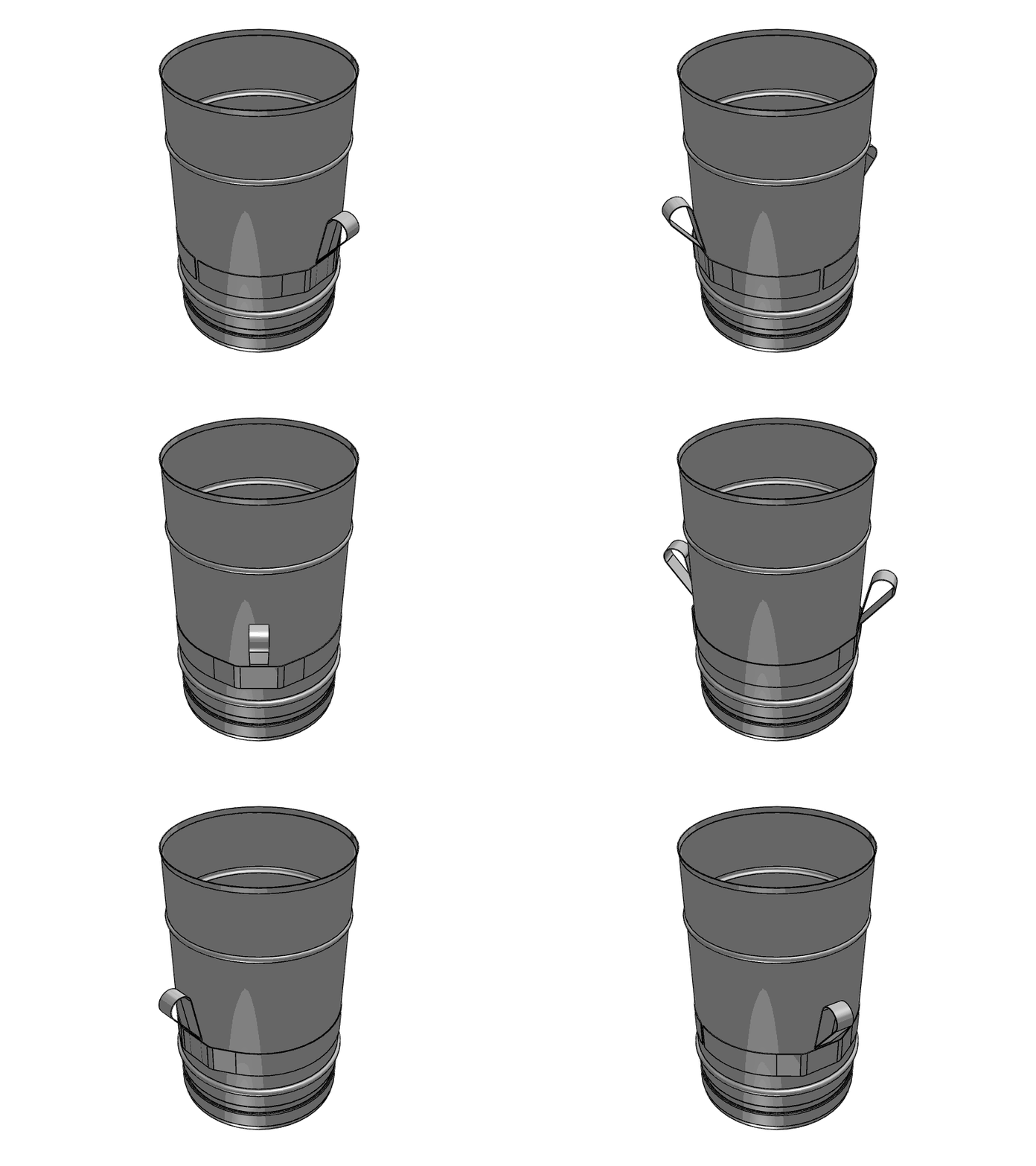
A common example of bleed elements are pressure relief valves in hydraulic or pneumatic systems. These valves open automatically when pressure exceeds a certain threshold, allowing fluid to flow out in a controlled manner to limit pressure in the system. This prevents overloading and possible damage to system components.
Another application of drain elements is in electronics. There, for example, fuses are used as drain elements. When the current flow exceeds a certain value, the fuse melts and interrupts the current circuit. This protects against overload and possible fires.
In mechanical engineering, release elements are often used as safety devices to prevent materials or structures from failing due to stresses or forces. For example, pressure relief joints or flexible elements may be installed in a structure to allow movement and reduce stress on the structure during strong earthquakes.
The exact operation of relief elements varies depending on the application. In many cases, they are designed to activate when a predefined threshold is reached. This can be done by spring mechanisms, electronic sensors, melting points, or other triggering mechanisms. Once the threshold is exceeded, the drains open or take some other form to dissipate or absorb the excess energy.
The exact selection and design of the release elements depends on the specific requirements of the application, such as the maximum allowable pressure, load capacity or response time. There are several types of relief elements, including valves, fuses, pressure relief joints, dampers, and other mechanical or electronic devices.


