


Which BIM formats are preferred by architects?
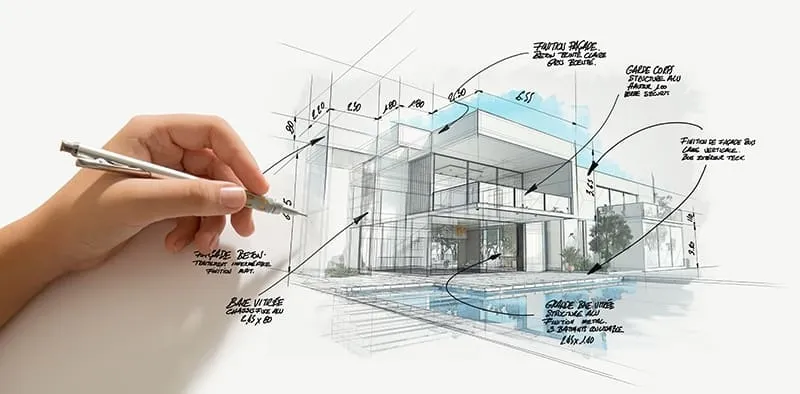
In 1982, Gábor Bojár began developing building information software that used technology similar to the Building Description System developed in 1975. Bojár was living in then-communist Hungary and had to pawn his wife's jewelry to smuggle Apple computers in order to develop his concept. Bojár subsequently released Graphisoft's Radar CH for the Apple Lisa operating system in 1984. This software technology was relaunched in 1987 as ArchiCAD, the first Building Information Modeling software that could run on personal computers.
Building Information Modeling (BIM) is a type of 3D modeling process used by architectural engineers in the design of buildings and other structures. BIM software provides a model-based process of file formats that contain 3D models with numerous information such as time, cost, material properties, geometries, construction schedules, thermal properties and more.
BIM plays an important role in the AEC (Architecture, Engineering and Construction) community and goes beyond just 3D representation by providing an overview of all the information of the project. It includes CAD software products commonly used in architecture and construction and provides tools and libraries that include mechanical, electrical and plumbing details.
BIM involves an intelligent 3D modeling process to effectively plan, design, construct and manage processes for building or infrastructure projects. By using shared BIM resources, project data planners, developers, contractors and all other stakeholders can work from the same data and processes, ensuring accuracy and accessibility.
According to a study by Zion Market Research, the global BIM market was valued at approximately $14.72 billion in 2021 and is expected to grow to approximately $52.5 billion by 2030, at a CAGR of approximately 13.9% from 2022 to 2030.
How architects and manufacturers use BIM
Architectural engineers use applied and theoretical information and building elements when designing buildings and other structures. They must design economical, safe and efficient building systems for the sustainability, resilience, comfort and ergonomic productivity of occupants.
A great building is the result of planners, architects, engineers, designers and contractors working together with the same goal in mind. BIM software facilitates open collaboration between all stakeholders and enables multiple import and export of different file formats, such as XLS, DWG, SAF, RVT, DXF, EDF, SKP and PDF, as well as industry standards BCF and IFC and vendor-independent formats.
BIM software provides a model-based process of file formats that contain 3D models with numerous types of information, including
| - Time | - costs | - geometries |
| - Material properties | - Schedules for construction | - Thermal properties |
BIM plays an important role in the AEC community. BIM files allow engineering firms to go beyond just 3D representation by providing an overview of all the information of the project. AEs can even create 4D models after linking the 3D BIM model elements to the time factor, allowing for a more comprehensive visualization and analysis of the progression of the construction project's activities.
Of all the BIM formats, .RVT, Autodesk's proprietary format for Revit files, is undoubtedly one of the most popular. However, Revit files alone do not support the important delivery of leads and sales.
Sowhich BIM formats do architects prefer ? It's often a question of preference, current software compatibility or best fit for the industry.
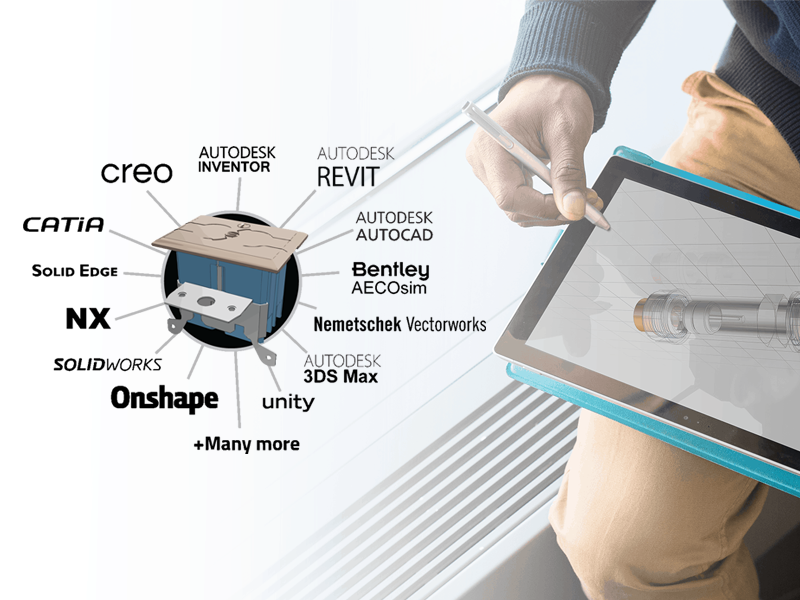
Preferred Building Information Modeling solutions for architects
Architects and AE firms consider several factors when selecting BIM formats, such as:
- whether the BIM software provider is easy to use
- Whether the software contains manageable work steps
- Does the software offer dynamic updating and editing options?
All of these factors help to define potential user satisfaction. Based on these attributes, we find that the five BIM software platforms listed below are preferred by users. The order is not necessarily decisive, as many BIM software platforms are better suited to certain types of projects than others. For example, some are better suited to construction projects such as bridges or large industrial buildings, while others are more suited to residential, commercial or even land use projects.
Autodesk Revit features enable effective coordination of all project partners, including architects, designers, contractors and project managers. Design changes made in Revit models are automatically updated for all users to ensure coordinated and reliable designs throughout the project.
Revit focuses on data and values, providing the flexibility most users need to develop their own content and modify existing data. The software can include a robust graphical programming engine called Dynamo, which makes it easy for inexperienced, non-technical users to develop complicated geometry and perform data-driven tasks.
Autodesk Revit software can be used to create information-rich models that enable architects, engineers and contractors to collaborate efficiently in real time to make accurate decisions early and throughout the design and development process.
Developed by industry leader Trimble Inc., Tekla provides data-rich building models that increase productivity, foster collaboration between disciplines and minimize errors in the model's data.
Tekla Structures is based on Xsteel structural steel modeling software and is widely used by civil and structural engineers. It provides complex 3D BIM software structures for modeling and includes accurate, multi-material models that contain design information for creating, merging, managing and distributing usable system-wide data.
Tekla Structures focuses on steel and architectural structures and also considers other building materials such as timber, concrete and other materials used throughout the building envelope or structure.
Tekla Structures is ideal for large-scale projects where BIM is used to manage raw materials, construction materials and additional resources in the design and development of airports, bridges, large shopping centers and sports stadiums.
Sometimes referred to as the Swiss army knife of BIM software, ArchiCAD is popular with architects, designers, engineers and urban planners due to its functional and simple user interface, offering comprehensive project design capabilities.
It is available for Macintosh and Windows users and is one of the BIM software platforms that is easy to use even for beginners. ArchiCAD was launched in the late 1980s and is one of the original BIM software products with a long history of proven innovation.
A professional BIM software solution with a strong reputation in the AEC community, ArchiCAD provides accurate building data management and an intuitive, open and collaborative design environment that automates open source documentation. ArchiCAD unites architects, engineers and other stakeholders in a common model to enable an integrated design workflow with enhanced collaboration.
Vectorworks Architect is an all-in-one program that provides a simple and efficient way to create and review design concepts. Designed with the architect's design process in mind, it is one of the best BIM software programs in the industry. It allows users to conceptualize and edit projects while generating drawings and scheduling project components in real time and provides solutions for data management and algorithm-based workflow.
Vectorworks Architect's BIM software includes some of the best design, modeling and documentation features, offering architects and design teams the ability to think and work outside the box.
There are some all-in-one construction and project management software features that Vectorworks doesn't have, although it does offer many other products that work seamlessly with its BIM platform, including software for industrial lighting, site mapping, entertainment facilities and more.
ALLPLAN's 3D BIM design platform focuses on the entire design-build process.
Architects and engineers can use ALLPLAN to bring together all project phases of the design and construction process. This makes the software ideal for mapping the entire construction process from concept to final design, prefabrication and construction.
ALLPLAN also offers easy-to-use data exchange to quickly switch between 2D and 3D working methods and deliver high-quality information with procedural precision.
In addition, ALLPLAN increases the efficiency of design-build workflows through the ability to build virtually before building in reality. This allows designers and builders to identify clues to conflicts and errors early in the design phase, avoiding costly construction delays and overruns.
Other related platforms commonly used to support Building Information Modeling
- Autodesk is a project review software that improves BIM coordination as a 4D planning tool by linking schedules to BIM objects. Navisworks helps with cost and schedule control by utilizing both 4D and 5D simulation. It then animates and interacts with the simulation model objects to create and manage schedules directly from the project models, while importing cost items and schedules from external project management software.
- SketchUp is a 3D modeling software for design and construction. SketchUp's Pro Desktop is a 3D modeling CAD program for multiple drawing and design applications covering architecture, civil and mechanical engineering as well as interior design, product design, landscape architecture and even game development. It is widely used to create and edit 3D models while offering the ability to connect to BIM workflows.
- AutoCAD® is a tool for BIM. It is one of the most popular computer-aided design programs and an integral part of many BIM platforms. AutoCAD has unique features and libraries that facilitate architecture, 3D mapping, mechanical design and much more.
- Autodesk® BIM 360™ is a cloud-based environment for managing construction data. As part of the Autodesk Construction Cloud, BIM360 connects data, workflows and teams. Built on 2D modeling, 3D drawing and clash detection, BIM360 acts as a repository for design and construction documents. It is used to access data via the cloud and achieve complete transparency for all aspects of a project.
- BIMcollab is a cloud resource that centralizes all project matters and provides a clear overview with intuitive functionality and reporting capabilities. BIMcollab sets deadlines and assigns tasks to team members who are notified in real time when changes are made to the project.
- Rhino integrates with BIM workflows and other plugins to link object data and geometry to BIM models. Its plugins allow import and export with the IFC file format for exchanging Rhino models with other AEC platforms.
Conclusion
Building Information Modeling solutions are necessary for the AEC community to work effectively in today's construction industry. They facilitate collaboration between design and construction teams in the use of technology to create and manage information throughout the lifecycle of a project. BIM consolidates all multidisciplinary documentation into a collective data set that other team members and contractors can access and utilize.
Sources include:
- BuildCentral, Inc.
- ConstructionPlacements
- Frontiers Media S.A.
- G2.com, Inc. #1
- G2.com, Inc. #2
- Marketsandmarkets
- ParametricArchitecture
- Penn State College of Engineering
- Planning
- PR Newswire
- UNIFI Labs
Learn how your organization can deliver BIM data through your website and more


