


The Times Square New Year's Eve ball drop technique
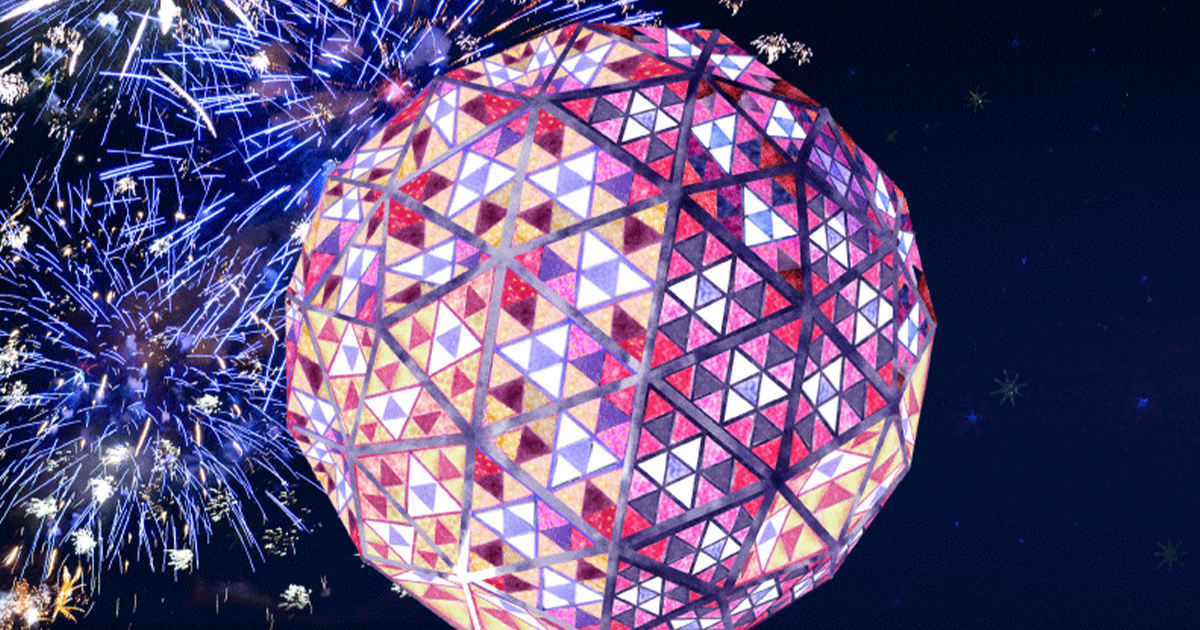
Learn more about the origins of the Times Square New Year's Eve ball drop and see how the technique of the ball has evolved over the last century.
Why do we drop a ball on New Year's Eve?
The tradition dates back to 19th century maritime England. It dates back to the mid-nineteenth century. People in towns and cities would drop a ball from a high point at exactly one o'clock every day so that ship captains could adjust their navigation systems to the local time.
The history of New Year's Eve in Times Square
In 1904, Times Square was not yet the iconic New Year's Eve location we know it as today. Back then it was still called Longacre Square and was mainly a huge open space with drab apartments and horses. But with the advent of electricity and public transportation, the area began to change.
The development of Longacre Square led to an influx of businesses, including the New York Times. When the New York Times moved into Longacre Square in 1904, the newspaper's owner convinced the city council to rename the area Times Square in honor of the newspaper.
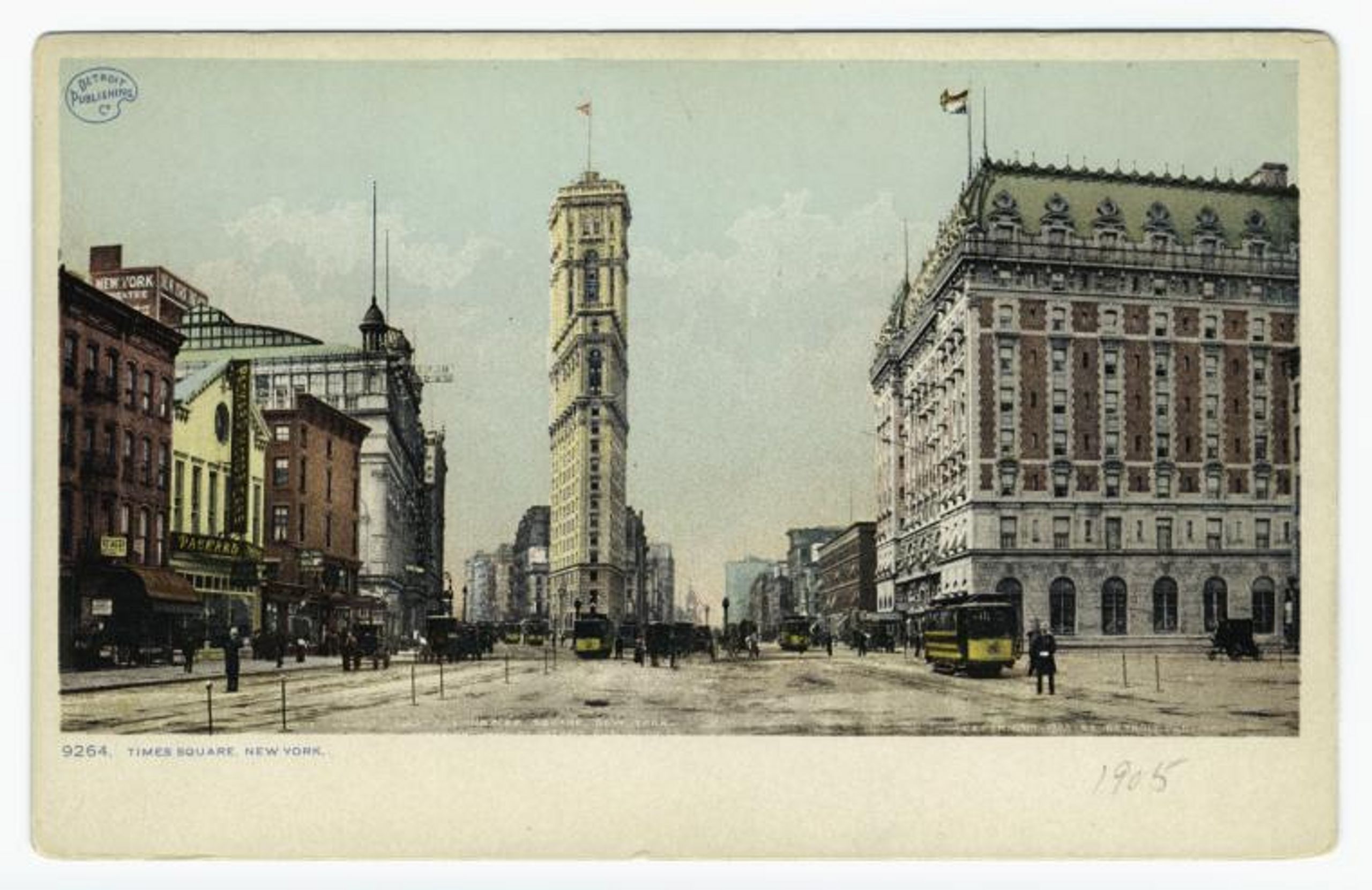
Longacre Square (now Times Square) in New York City in 1905, with the then headquarters of the New York Times, One Times Square, in the center. Image from the New York Public Library.
However, a name change was not enough. The New York Times wanted something bigger to celebrate their new headquarters. They decided to hold a ribbon-cutting ceremony on New Year's Eve.
At the time, New Yorkers always celebrated New Year's Eve at a church just a few miles from Times Square. The church elders hated this tradition because of the disruptive, rowdy crowds. When the Times announced its own celebration, the church was happy to send the crowds to Times Square.
The Times Square party was a huge success, and the square quickly became the new favorite spot for New Year's Eve celebrations.
The history of the Times Square New Year's Eve Ball
At the first New Year's Eve parties in Times Square, there was no ball drop. Instead, the New York Times set off fireworks from the base of its building. After the city banned this practice in 1907, it decided to adopt the maritime tradition and drop a giant ball to signal the time.
In 1907, when the first ball drop took place, half of the US was still using gaslights and candles. So the sight of 100 glowing bulbs descending from the sky was like magic, and the custom became a huge success.
Although the New York Times moved from Times Square in 1914, the tradition of the ball drop at the same building continues to this day.
The transformation of the Times Square New Year's Eve Ball
The Times Square New Year's Eve Ball has undergone several transformations and editions.
Today, it is covered in crystals and LED modules, but this change has only happened recently. You may remember the old versions that were covered with traditional light bulbs.
Until 1995, the entire Ball Drop team consisted of just seven employees who dropped the ball for many years using ropes, marking tapes and a stopwatch.
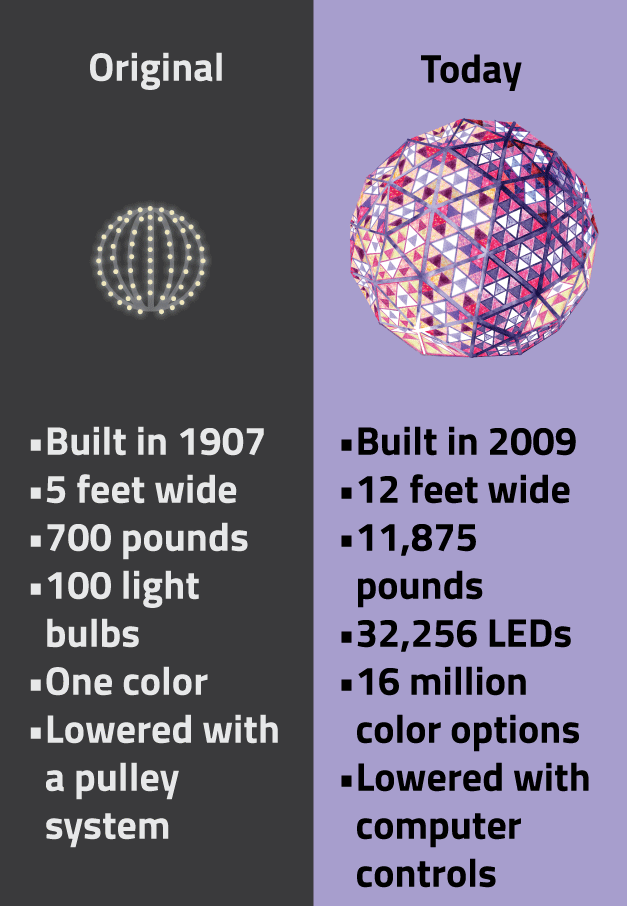
1907: The first ball was made of iron and wood, weighed about 700 pounds and had 100 light bulbs of 25 watts each.
1920: The original iron and wood ball is replaced by a 400-pound wrought iron ball.
1955: The wrought iron ball made way for a 150-pound aluminum ball.
1981-1988: The aluminum ball was temporarily redesigned into a giant apple as part of the "I Love New York" marketing campaign.
1995: Event organizers added rhinestones and computer controls to the aluminum ball.
1998: After 40 years, the aluminum ball is lowered into the air for the last time.
1999: To welcome the new millennium, Waterford Crystal and Philips Lighting work together to develop a completely new ball. This had the crystals and triangles we see today, along with the latest technology:
2007: To mark the 100th anniversary of the Ball Drop, Waterford and Philips undertook another redesign. They replaced the incandescent bulbs with brighter, color-changing LED lights.
2009: Organizers introduced a larger version of the Centennial Ball that can float over Times Square year-round.
Today's New Year's Eve Ball
Today's 2009 Times Square New Year's Eve Ball is 12 feet wide, weighs 11,875 pounds and is covered with 2,688 crystal triangles. It has 32,256 LEDs for red, blue, green and white, allowing organizers to choose from more than 16 million colors each year:
The Times Square New Year's Eve Ball has come a long way since its humble beginnings in 1907, transforming from a simple iron and wood creation into the dazzling LED and crystal masterpiece it is today. This iconic event shows how engineering and technology can enhance even the most traditional celebrations.
Just like the evolution of the ball, you can bring your own designs to life with precision and creativity thanks to 3Dfindit. Visit 3Dfindit to download 3D CAD, CAE and BIM maker models in over 100 different formats from more than 6,000 catalogs, and integrate cutting-edge components into your next design project! Discover 3Dfindit today!
Additional resources
NYE History and Times Square Ball
A brief history of the Times Square New Year's Eve Ball Drop


